Why predicting space weather over India is hard: new IIG model tackles the geomagnetic equator problem
India's proximity to the geomagnetic equator makes ionospheric conditions especially hard to predict, a challenge a new model from the Indian Institute of Geomagnetism aims to address.
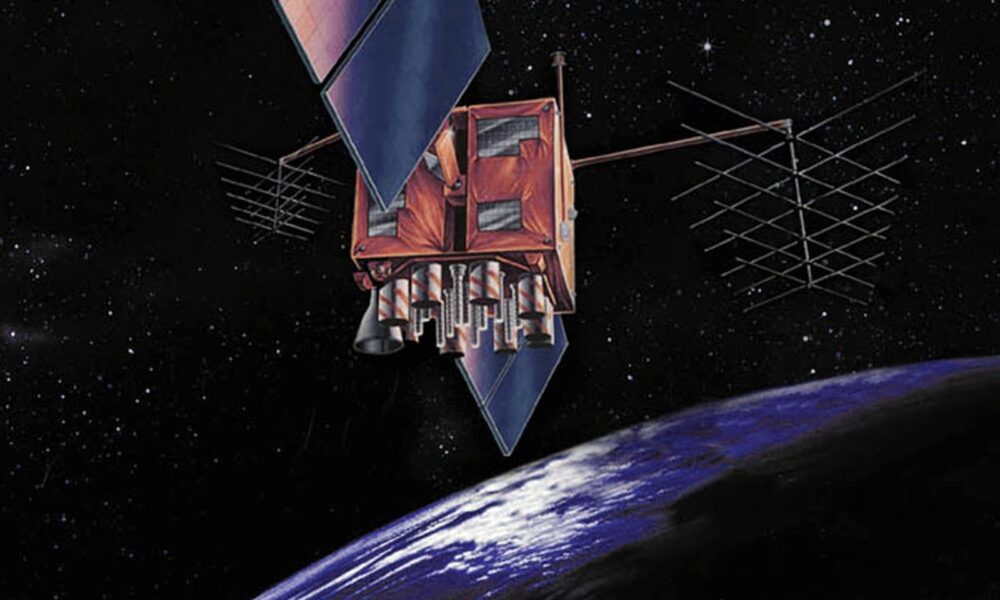
Understanding the ionosphere, the electrically charged layer of Earth’s upper atmosphere that carries radio and navigation satellite signals, is not straightforward. Conditions change from hour to hour and are especially difficult to predict over India because the country lies close to the geomagnetic equator, where the movement of charged particles is particularly complex.
Older models typically assumed this layer thins out at a fixed, steady rate with height, a simplification made largely because reliable real-world data was scarce. In reality, that rate varies significantly, especially near the equator, meaning existing models often drifted from what was actually happening overhead.
Researchers at the Indian Institute of Geomagnetism, an autonomous institute under the Department of Science and Technology, tackled this problem by combining observations from ground-based ionosondes with satellite measurements from the COSMIC radio occultation mission. Their method reconstructs how charged-particle density actually changes with height over the Indian region, offering a far more realistic picture than earlier fixed-rate assumptions, according to the DST.
The improvement matters because most low Earth orbit satellites, including many used for communication and Earth observation, operate within roughly 1,000 kilometres of Earth, precisely the zone this new model captures more accurately. Better models here can help mission planners predict how radio signals will behave, improve satellite tracking, and make navigation systems more dependable during changing space weather.
The research was carried out by K Siba Kiran Guru, S Sripathi and RK Barad and published in the journal AGU Radio Science. The study’s authors say the approach, developed for India, could be adapted for other parts of the world to strengthen regional space weather prediction more broadly.


Leave a Reply