Why India’s textile industry might not cash in on its new UK trade deal
Despite a new India-UK free trade agreement removing tariffs of up to 12% on textile exports, analysts warn that structural weaknesses could limit how much Indian manufacturers actually gain.
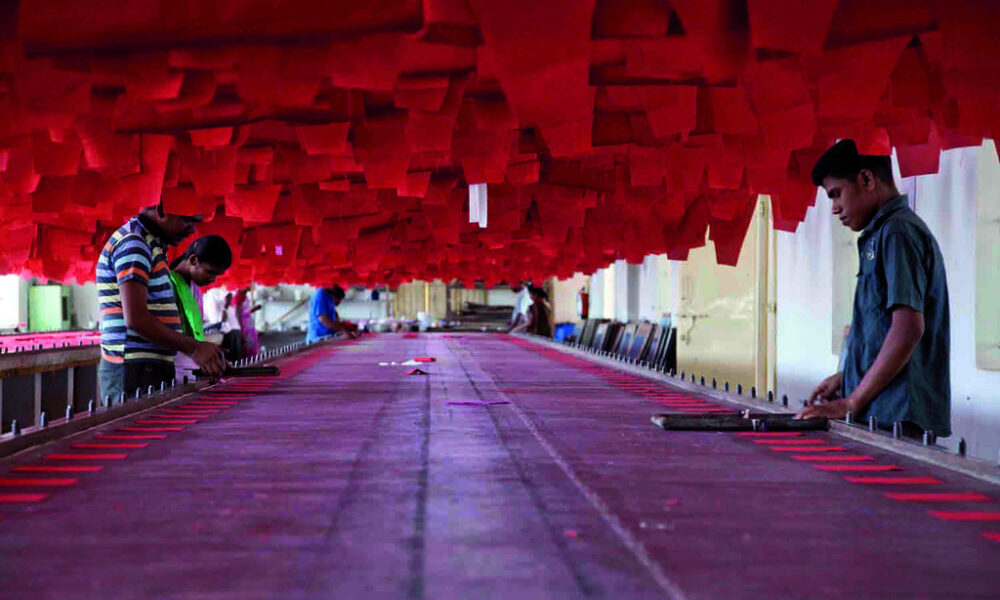
Not every trade deal delivers on its promise, and analysts are already flagging reasons India’s textile sector may struggle to fully cash in on the free trade agreement with the United Kingdom that took effect this Wednesday, even though it eliminates tariffs of up to 12% on exports.
Hitesh Jain, a strategist at Yes Securities, said the sector is less likely than industries such as automobiles or pharmaceuticals to convert preferential market access into sustained export growth. ‘Trade agreements may improve market access, but the sector is less likely to convert preferential market access into sustained export growth,’ he said, pointing to structural challenges, shifting global demand patterns, and gains that Vietnam and other countries have already banked from the ‘China plus one’ shift away from Chinese manufacturing.
Jain also noted that currency weakness has not helped Indian exporters as much as expected. ‘Due to high import dependence, our landing costs were higher, which negated our export competitiveness even during rupee’s depreciation,’ he said.
The concerns are not purely academic. A medium-scale exporter, speaking on condition of anonymity, told TOI the cost gap with rival exporting nations can run 20-30% higher, largely due to elevated man-made fibre and cotton fabric costs, and urged the government to incentivise the domestic MMF ecosystem and strengthen the cotton supply chain.
That said, industry body representatives remain more optimistic in the near term. Prabhu Dhamodharan, convener of the Indian Texpreneurs Federation, said the FTA is already generating a demand pull, citing long-standing relationships with UK retailers such as Primark, Next, Tesco and M&S that let Indian exporters ramp up quickly, unlike newer market entrants.
Dhamodharan projects India’s roughly 6% share of the UK’s apparel import market could nearly double within four to five years, with medium and small firms weighing automation and capacity investments once order visibility improves — a more upbeat outlook that stands in direct tension with the structural caution raised by market analysts.
Wikimedia Commons/by Fabrics for Freedom



Leave a Reply