Gauss and Einstein agreed on one thing: truth is usually simple, not complicated
Mathematician Carl Friedrich Gauss and physicist Albert Einstein both believed that genuine understanding tends to look simple rather than elaborate.
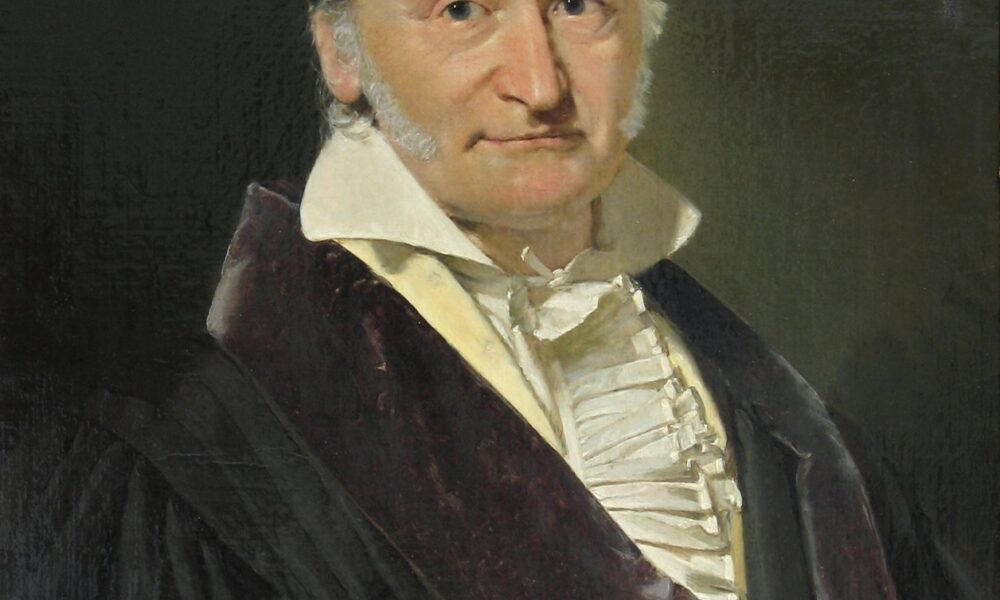
Carl Friedrich Gauss, one of the greatest mathematicians in history, left behind a pointed observation about philosophy: ‘When a philosopher says something that is true then it is trivial. When he says something that is not trivial then it is false.’ Underneath the wit sits a serious point about how easily complicated language gets mistaken for genuine insight.
Gauss argued that true philosophical statements tend to be trivial, while claims that sound genuinely original or unusually complex should raise suspicion rather than admiration. Ideas do not deserve respect simply because they sound sophisticated; they earn it by surviving actual scrutiny.
Einstein later made a similar point, arguing that everything should be made as simple as possible, but no simpler. The two men worked in different centuries, but shared the same instinct: the strongest scientific theories, such as Newton’s gravity or Darwin’s natural selection, reduce a mess of observations down to a small number of clear principles.
Gauss reached the same conclusion long before it became a common observation about good science. If an idea cannot be stated clearly, that is often a sign it has not actually been fully understood yet, rather than evidence of unusual depth, a standard Gauss applied throughout a career that earned him the nickname ‘Prince of Mathematicians.’



Leave a Reply