One banyan tree can become an entire forest, here’s how
Banyan trees can produce hundreds of secondary trunks and spread across several acres while still remaining a single organism, a biological trait that lets them outlive civilizations.
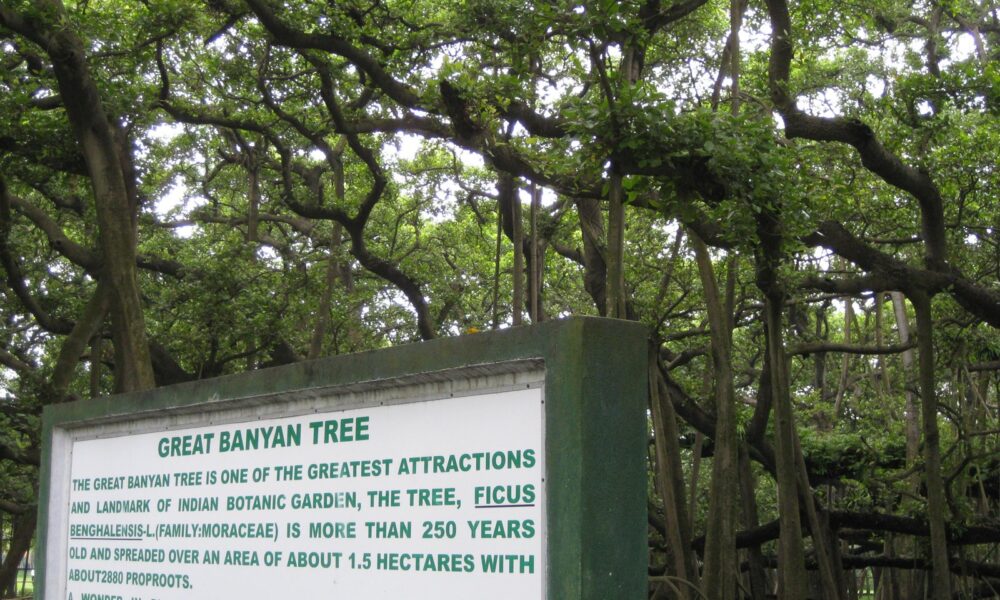
A single banyan tree can produce hundreds of secondary trunks and cover several acres of land while remaining just one organism. Unlike other trees that grow from a single trunk, banyan trees form aerial roots on their branches, which descend to the ground and thicken into woody trunks over time.
The life cycle of many banyan trees begins as an epiphytic plant: seeds spread by birds germinate on other trees, and the growing banyan’s roots gradually wrap around the host tree and reach the ground, eventually killing the host and allowing the banyan to stand alone. If the banyan’s own primary trunk is later destroyed or dies, the tree survives through its secondary trunks, in a process of constant renewal that can make it nearly impossible to tell which trunk was the original.
A fully grown banyan functions as a complete ecosystem in its own right, with its wide canopy sheltering birds, bats, squirrels, monkeys, reptiles and insects, and its figs feeding wildlife year-round, especially during periods when other fruit is scarce. Its branches also create cooler microclimates through shading and transpiration, making banyans significant for biodiversity in tropical and subtropical regions.
Some banyan trees alive today are estimated to be 400 to 500 years old, standing through kingdoms rising and falling and cities disappearing, though accurately ageing them remains difficult since the trunk keeps regenerating.
Image: Wikimedia Commons/by McKay Savage



Leave a Reply