Japan’s stigmatized homes crisis: the business of proving houses are ghost-free
As Japan's vacant home count climbs past nine million, a niche industry has emerged to certify stigmatized properties are free of paranormal activity so owners can sell or rent them again.
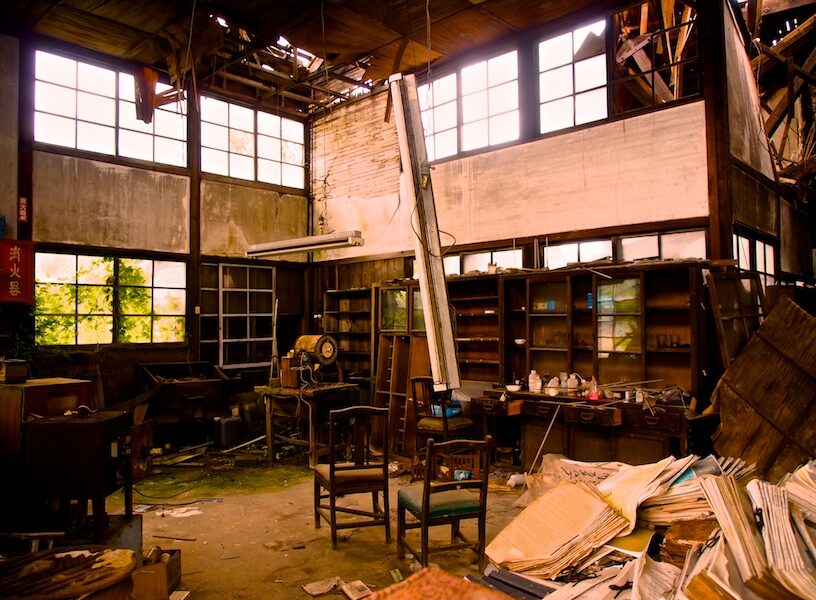
Japan’s housing market has a problem that has little to do with prices or supply: fear of the dead. A government survey conducted in late 2024 found the country had nine million empty homes, 13.8% of all residential properties, and a meaningful share of them are what Japan calls ‘jiko bukken,’ or stigmatized properties — homes where a suicide, murder, fatal fire, or a ‘lonely death’ (an elderly resident dying alone and remaining undiscovered) has taken place.
Out of that problem has grown a small, specific industry: paid ghost investigations. A property management company called Kachimode charges 88,000 yen (around Rs 31,000, or $542) per property to send an investigator to spend a full night, from 10 p.m. to 6 a.m., inside a stigmatized home. The investigator brings video cameras, audio recorders, thermography equipment, electromagnetic wave detectors, and sensors that log temperature, humidity, atmospheric pressure and noise, all in service of producing a report agents can show buyers as proof the home is free of lingering ‘bad spirits.’
Kachimode president Kazutoshi Kodama told DW that the resistance to these homes runs deep in Japanese culture. ‘Death equates to impurity and misfortune,’ he said, adding that many people refuse to even walk through the door of a stigmatized property. One two-storey house in Yokohama has sat empty for at least five years for this exact reason, even though it is structurally sound enough to renovate.
Kodama, who also consults a university professor specializing in monitoring supernatural phenomena, said the equipment does occasionally register something odd — a video camera stopping without explanation, a microphone malfunctioning — but in nearly every case, the event cannot be reproduced and is treated as an isolated occurrence. A smaller number of properties, he said, continue to show unexplained activity over extended periods, and those remain especially difficult to rent or sell regardless of investigation.
The financial consequences of the stigma are steep and legally unavoidable. Japanese law requires agents to disclose a property’s history to prospective buyers or tenants, and dedicated websites list which homes qualify for the label. Landlords typically respond by cutting rents around 30% in major cities and by as much as 50% in smaller towns; Kodama said he knows of one property that remained vacant for more than 1,000 days. Joey Stockerman, co-founder of Akiya Mart, another company working with vacant Japanese homes, described an investor who bought a stigmatized property in a Tokyo suburb for under $5,000 — roughly 5% of its real value — that still sat empty for two years after purchase.
Akiya Mart’s answer to the same problem is less technical and more traditional: a package that includes a Shinto priest performing a cleansing ritual on a property before it returns to the market. Between the sensors-and-cameras approach and the priest-led rituals, Kodama sees the underlying business only growing. ‘I think this sector has potential because there are people in need,’ he said, while acknowledging that homes with genuinely recurring unexplained activity remain the hardest to place no matter what.
[Wikimedia Commons/by Syuzo Tsushima]



Leave a Reply