For 80% of men, this Japanese discovery could rewrite hair loss treatment
Researchers at Japan's RIKEN Institute and OrganTech have discovered a 'third cell' that completes the biological components needed to fully regenerate a functioning hair follicle.
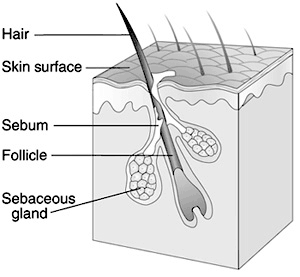
Pattern hair loss touches an estimated 80% of men and 50% of women at some point in their lives, and until now, nearly every available treatment has aimed at slowing that loss rather than undoing it. A new study from Japan’s RIKEN Institute and the Tokyo-based OrganTech may change that calculus. The team says it has discovered a previously unidentified ‘third cell’ capable of completing the cellular machinery required for a hair follicle to grow and shed in a normal, repeating cycle. The research was published in Biochemical and Biophysical Research Communications.
The project is led by Takashi Tsuji, a visiting senior researcher at RIKEN and chairperson of OrganTech, whose lab has spent nearly two decades working on regenerating organs from adult stem cells. That earlier work included a 2012 study in which epithelial stem cells and dermal papilla cells, extracted from adult mouse whiskers, were combined to build the foundation of a hair follicle capable of inducing new growth once transplanted.
That 2012 breakthrough came with a catch: once the lab-grown follicle precursors were transplanted into living tissue, additional cells from the surrounding area kept migrating in to support them, suggesting the structures could not function as fully independent follicles on their own. It took until now for Tsuji’s team, using specialised cell-isolation techniques, to identify what was missing — a cell type they call around-bulge mesenchyme, or ABM, found in the tissue near the follicle.
When ABM cells were combined with the two previously known cell types and transplanted into engineered skin, all three cell types worked together to reproduce a complete hair cycle — spanning growth, transition, rest and shedding phases — under laboratory conditions in mice. The newly identified cells were shown to trigger the shift from a resting phase into active growth and to support elongation of the follicle itself.
The research also revealed a previously undocumented mechanical detail: as a hair shaft extends upward through the skin, the hair bulb at the follicle’s base actually migrates downward toward the subcutaneous fat layer, rather than simply being pushed outward — a ‘downgrowth’ effect the team links to the newly found cells as they differentiate around the bulb.
Current alopecia treatments largely work within the body’s existing biological system instead of rebuilding damaged follicles, and the researchers say the next step could involve harvesting regeneration-supporting cells from patients, expanding them in culture, and reintroducing them into affected areas. “This work defines a foundational cellular configuration for functional hair follicle regeneration,” OrganTech CEO Yoshio Shimo said, framing the discovery as part of a broader strategy toward organ-level regenerative medicine built on precisely coordinated cell interactions.
Image credit: Wikimedia Commons/NIH (public domain).



Leave a Reply