Nine villages, one substation: Nagpur’s 4MW fix for farm power
A newly commissioned 4-MW solar park at Nagpur's Kachari Sawanga substation now delivers eight hours of daytime electricity to farmers in nine villages.
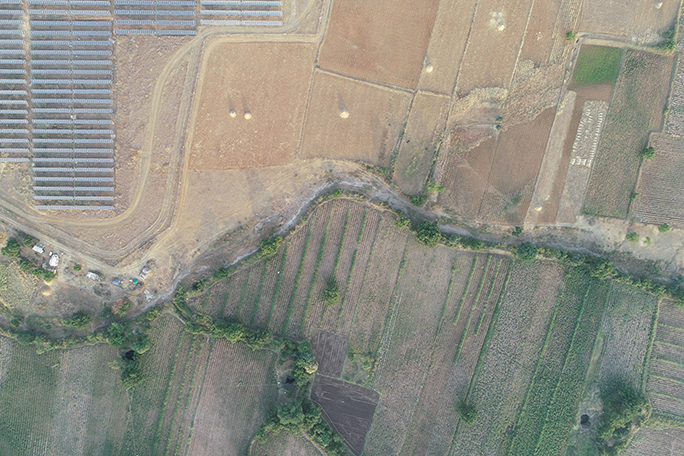
A single substation in Katol taluka is now powering a nine-village shift away from night-time irrigation. MSEDCL commissioned Nagpur district’s first solar park at the 33/11-kV Kachari Sawanga substation on July 16, a 4-MW facility that gives 1,074 agricultural consumers eight hours of continuous daytime electricity.
The villages covered are Ridhora, Khapri Kutumba, Ghartwada, Gujar Khedi, Sabkund, Kokarda, Kachari Sawanga, Borkhedi and Panchdhar. MSEDCL officials said routing solar generation directly through the local substation, rather than the wider grid, cuts transmission losses and keeps supply more consistent for farmers who depend on it for irrigation.
The project falls under the Maharashtra government’s Chief Minister Solar Agricultural Feeder 2.0 scheme, which is building decentralised solar capacity near substations across the state. MSEDCL leased the land to a private developer for 25 years and agreed to purchase the power generated at under Rs 3 per unit through a Power Purchase Agreement, before supplying it onward to farmers under the state scheme.
Officials estimated the investment at Rs 10-12 crore for the 4-MW park, calculated from MSEDCL’s standard cost of Rs 2.5-3 crore per installed megawatt. The utility said multiple similar parks are already under development elsewhere in the district as part of a broader push to widen daytime power access for agricultural users.
The Kachari Sawanga project was executed under the guidance of chief engineer Rajesh Naik, superintending engineer Sanjay Wakde, and executive engineers Narendra Katare and Narendra Dhawad. Naik said the project is a meaningful step toward reliable daytime power for farmers, alongside promoting clean energy and supporting the rural economy.
With more parks in the pipeline, MSEDCL’s approach signals a template other districts in Maharashtra could follow: pair a private developer’s capital with a long-term land lease and a fixed-rate power purchase deal, and route the output straight to farmers who previously had no choice but to irrigate after dark.
Wikimedia Commons/by Kanadaurlauber



Leave a Reply