Switzerland’s Solution for Historic Buildings in the Way: Move Them, Don’t Raze Them
Rather than demolish old buildings blocking new infrastructure, Switzerland has spent decades physically relocating them on rails and rollers instead.
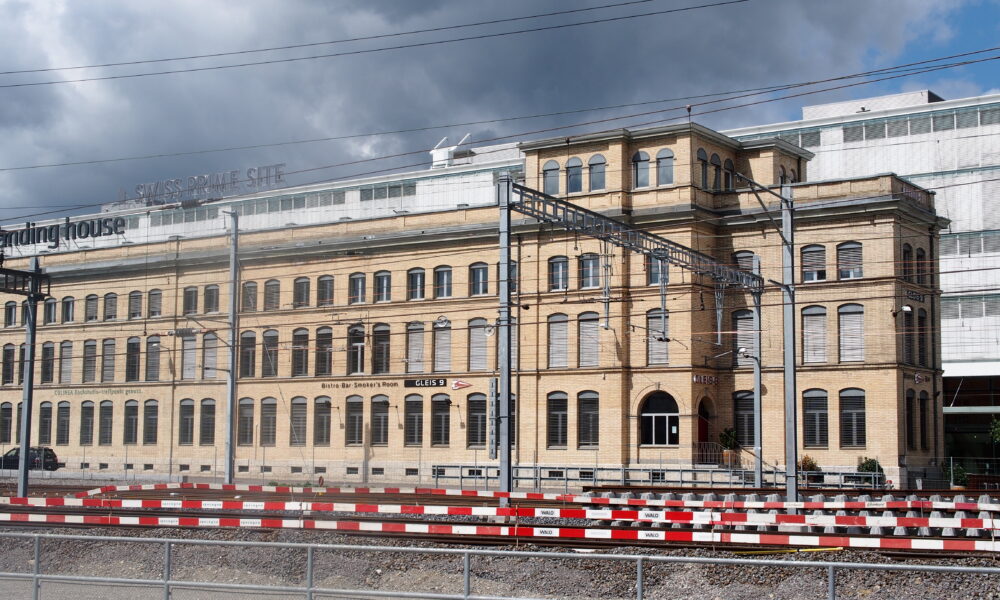
Switzerland has spent decades solving a problem most countries handle with a wrecking ball: what to do with historic buildings that stand in the way of new roads, railways or construction. Instead of demolishing them, Swiss engineers frequently lift the structures onto rails or rollers and physically relocate them to a nearby site — a practice that has saved churches, farmhouses and industrial landmarks alike.
The most striking example is the MFO building in Zurich’s Oerlikon district, the former administrative headquarters of the Maschinenfabrik Oerlikon. Built in 1889 and stretching 80 metres, the brick structure once anchored one of Switzerland’s most important industrial firms, a company that later grew into engineering giants like ABB. It found itself in the path of two new platforms when Swiss Federal Railways planned to expand tracks at Zurich Oerlikon station in the early 2000s, putting the building on the demolition list.
Local residents and heritage groups objected, and the city of Zurich commissioned architecture firm Müller and Truniger to study whether relocation was viable. The resulting feasibility study found that moving the entire structure to a site just outside the railway perimeter was technically achievable and economically sound, prompting the local government to fund and provide land for the project. The move finally took place in 2012, after the building had stood on its original spot for 130 years — long enough to become a genuine symbol of the neighbourhood.
The engineering itself was painstaking: the building was first supported on temporary steel props while its original foundation walls were removed and replaced with new concrete beams. Steel rails and rollers went in underneath, and hydraulic presses slowly pushed the structure along a fixed track — about 60 metres westward at just over a millimetre per second, a journey lasting 17 to 19 hours before the building settled into its new foundation to within a few millimetres of precision.
Switzerland has repeated this approach with several other historic structures over the years, relying on specialist relocation firms — often small, family-run businesses — that have built deep expertise in the field. With roughly 75,000 buildings nationwide holding formal historic protection status, relocation has become a practical alternative to redesigning entire infrastructure projects around a single building.



Leave a Reply