Underwater eruption produced lava fast enough to fill 4,000 Olympic pools in 16 days
A newly documented seafloor eruption released up to 160 million cubic metres of lava over 16 days in the Indian Ocean.
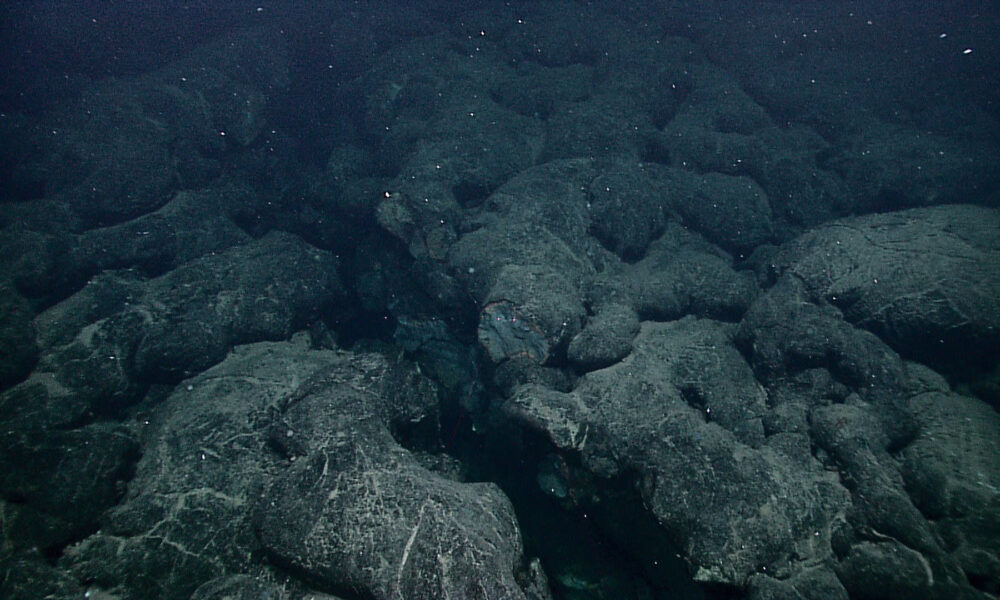
An eruption along the seafloor of the Southeast Indian Ridge released between 148 million and 160 million cubic metres of lava over roughly 16 days in April and May 2024, according to a study published in Nature on July 8, 2026, that captured the first direct, in-situ observation of a complete seafloor spreading episode.
Indirect evidence suggests the eruption began within hours of an initial seismic swarm. Temperature sensors near the seabed detected warming, while hydrophones recorded thousands of distinctive acoustic signals associated with interactions between hot lava and seawater. Lava was supplied at an average rate of around nine to ten million cubic metres per day, steadily building fresh oceanic crust on the floor of the Indian Ocean.
By comparing detailed seafloor maps collected before and after the event, researchers identified extensive new lava flows scattered across the ridge valley, with some deposits exceeding 90 metres in thickness and stretching for several kilometres.
The eruption followed a swarm of earthquakes that appeared beneath the ridge valley on April 26, 2024, and migrated rapidly along the ridge axis — a pattern researchers say resembled the underground advance of magma forcing its way through cracks in the crust, ultimately reaching the surface as a major lava-producing event.



Leave a Reply