This calico cat’s ‘promotion’ saved a dying Japanese railway
A stray calico cat named Tama was appointed honorary station master of a struggling Japanese railway in 2007, and went on to generate more than ¥1.1 billion in economic impact for the region.
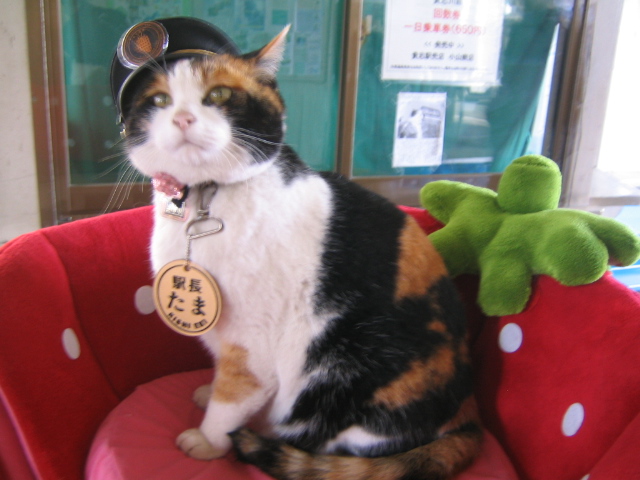
Wakayama Electric Railway had a problem in 2006: its Kishigawa Line, a rural route in western Japan, had been shedding passengers for years and was at risk of shutting down after the company took over its operations. Rather than pour money into a conventional turnaround, the railway tried something unusual.
A stray calico cat living near Kishi Station was already a familiar face to locals. In 2007, the railway’s president, Misutaka Kojima, formally appointed her as honorary station master, complete with a custom-made cap, and gave her the job of greeting passengers as they came through the station.
The move worked far better than anyone expected. According to Wakayama Electric Railway, passenger numbers climbed 17% in the cat’s first year on the job, as people travelled from around Japan and abroad just to meet her. Local restaurants, souvenir shops and other small businesses near the station reported a surge in visitors as a result.
The railway built on the momentum with Tama-branded trains and merchandise, and later rebuilt Kishi Station with a roof designed to resemble a cat’s face. An economic analysis by Professor Katsuhiro Miyamoto of Kansai University put the total impact of Tama’s fame at roughly ¥1.1 billion in her first year alone, once tourism spending and merchandise sales were factored in alongside the wider boost to regional business.
The phenomenon became known in Japan as the ‘Tama effect,’ and is still referenced by tourism researchers as a rare case of a low-cost, story-driven campaign outperforming traditional marketing. Tama was later given the title of Operating Officer at the railway, and after her death in 2015, thousands turned out for memorial events held in her honour, including a traditional Shinto ceremony.
Wikimedia Commons/by Sanpei



Leave a Reply