Never crouch near a mountain lion: the survival rule most hikers get wrong
Wildlife experts say a simple habit like crouching to pick up a child can make a mountain lion see a hiker as prey.
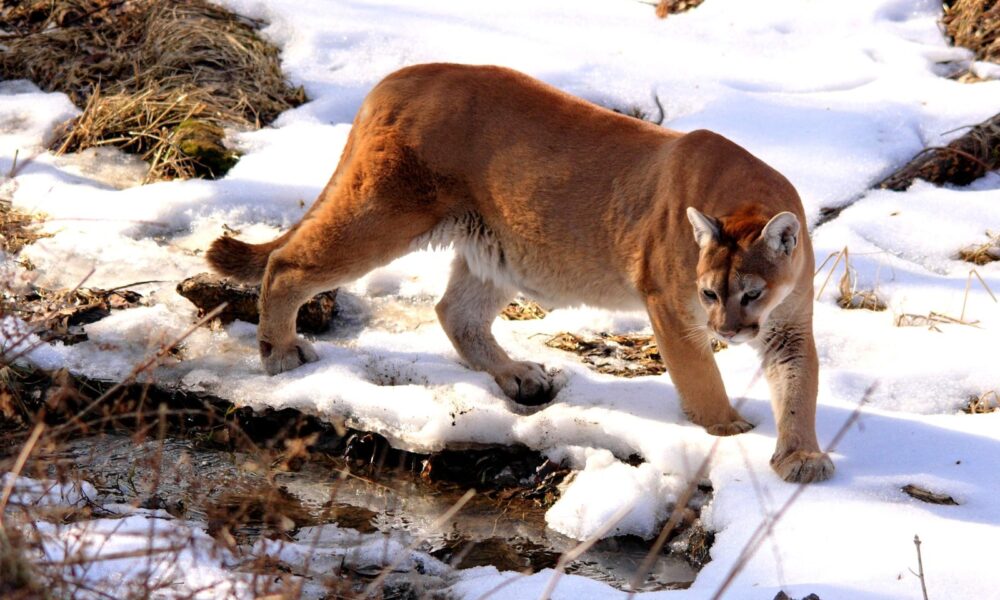
Wildlife biologists have a golden rule for anyone who comes face-to-face with a mountain lion on a hike: don’t crouch. According to wildlife safety guidance, standing humans are less likely to be seen as prey by a mountain lion, while a person who is squatting or bending over closely resembles a four-legged animal such as a deer. That means even picking up a child during an encounter should be done while staying as upright as possible, not by bending down toward them.
Mountain lions naturally try to avoid humans, so an encounter usually only escalates if the animal feels it has an advantage. If a lion moves toward a hiker, the advice is to wave the arms slowly and speak in a firm voice. Without turning away from the animal, a person should pick up stones, branches or items from a bag, such as a water bottle, and throw them near the lion, avoiding its head or eyes, to demonstrate that they can defend themselves rather than trying to hurt it. If the lion keeps advancing, throwing items directly at its body is recommended, and if it actually attacks, hikers are told to fight back aggressively using sticks, jackets or even a backpack as a shield, aiming for the head and neck.
The same caution applies before a lion, or any wild animal, is even spotted. Safety starts with avoiding being alone, since travelling in groups significantly lowers the risk because most animals steer clear of larger gatherings of people. Anyone hiking with children is urged to keep them close at all times, and putting phones and earbuds away helps hikers stay alert enough to notice an animal’s presence before getting too close.
Bears require a completely different, and more variable, response depending on their behaviour. A defensive bear, often one guarding food or cubs, may moan or swat the ground as a warning; the right reaction is to stay calm, speak softly and back away slowly without ever running. A predatory bear, by contrast, shows calm, silent interest and should never be met by playing dead; instead, experts say to stand ground, look as large as possible and shout loudly.
Large herbivores such as moose, bison and elk are frequently underestimated, yet they can be just as dangerous as predators, especially a moose protecting its calves. The guidance is to give these animals plenty of space, and if a moose charges, to run and take cover behind a tree or a vehicle rather than trying to outrun it in the open.
Experts note that the overall odds of any wild animal attack remain very low, a person is more likely to be hurt in a car accident involving a deer than by a mountain lion, and most encounters end without incident because the animal chooses to avoid humans first. Any serious encounter should still be reported to park rangers or local wildlife authorities right away.
Wikimedia Commons/by NaturesFan1226


Leave a Reply