Not all trees are equal in a wildfire: aspen can slow blazes that conifers accelerate
New research shows aspen trees behave very differently from conifers during wildfires, often slowing or stopping them rather than fuelling them.
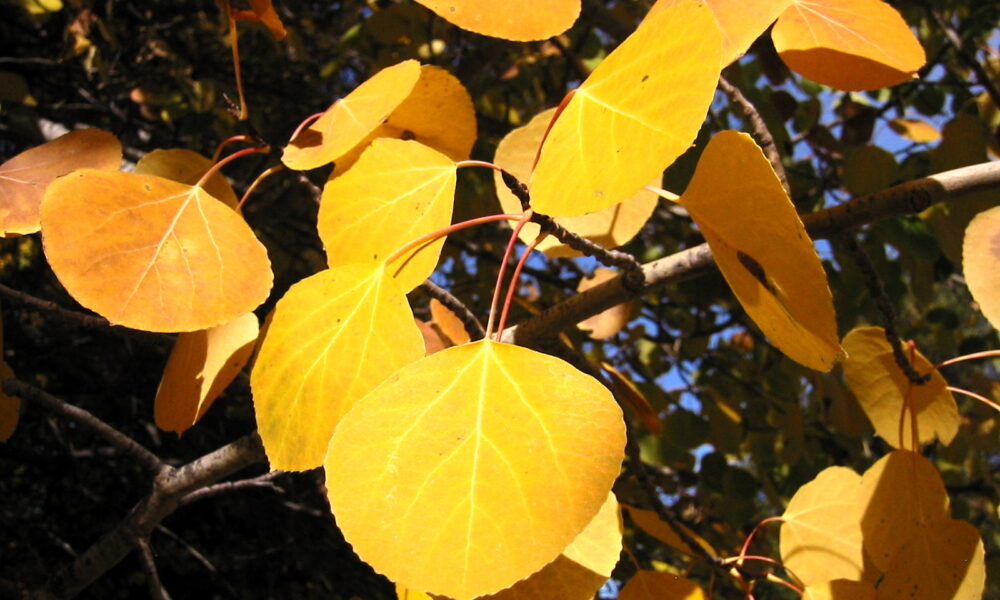
When wildfire moves through a conifer forest, more vegetation is usually assumed to mean a faster, larger blaze. Two recent studies — one from the southwestern United States, another covering Canada’s entire boreal forest — suggest that assumption breaks down when the trees in question are aspen.
Researchers at Western Colorado University, Colorado State University and the US Forest Service examined 314 wildfires that burned across the southwestern US between 2001 and 2020, analysing how aspen cover affected daily fire spread rates. Where aspen cover was below 10%, fires grew by an average of 1,112 hectares a day at a maximum spread of 2.1 kilometres a day. Where aspen cover exceeded 25%, those figures dropped to 368 hectares a day and 1.3 kilometres a day.
Aspen was also found more abundant along the edges of burned areas than within their interiors — evidence that fires do not merely slow near aspen stands but sometimes stop or change direction entirely. Researchers attribute this to aspen’s higher foliage and understory moisture content, along with high branches and chemical traits that reduce flammability, in contrast to the resinous, densely packed needles of conifer stands.
A separate Canadian study led by McGill University’s Flavie Pelletier found the same pattern nationally, with aspen more than twice as common along fire perimeters as within burned interiors, and the effect holding consistently across seasons.



Leave a Reply